







Dr. Rinad S. Beidas
One of the most cited implementation scientists in the world; leader in behavioral economics and de-implementation.
The RISE³ Lab seminar series
Leading implementation scientists present their work at McGill in sessions that are free, open to all and recorded. Organized by Dr. Guillaume Fontaine and co-sponsored by the Ingram School of Nursing and the RISE³ Lab, the series has run since May 2024; every recording is on YouTube.
Speakers to date. Select a portrait to watch the recording.
One of the most cited implementation scientists in the world; leader in behavioral economics and de-implementation.
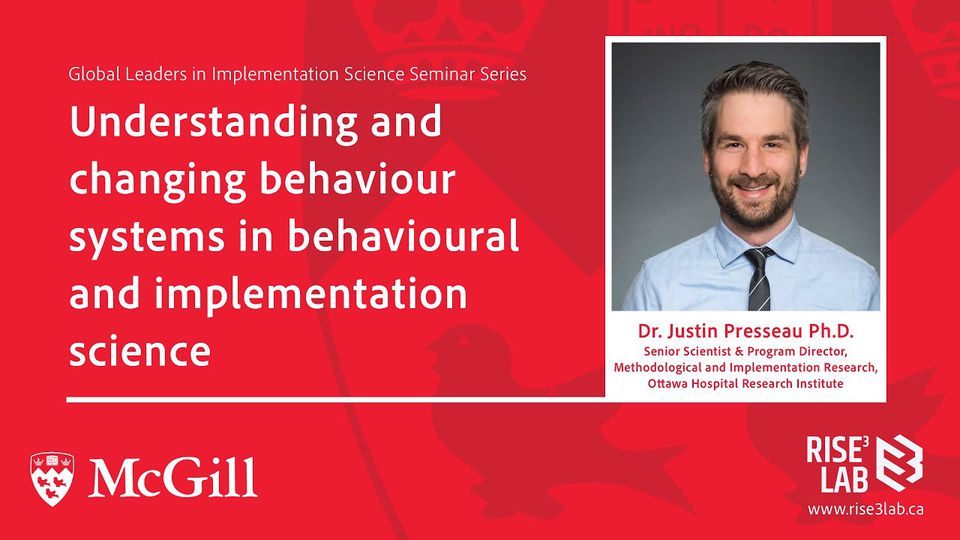
Behavioral and implementation science prioritize single, isolated behaviors, an approach with limited ecological validity, since behaviors exist within complex systems where motivation, time, and resources are finite. Dr. Presseau presents a behavior systems paradigm: how behaviors vary within individuals, the theoretical foundations of their interconnectedness, and next-generation research and intervention designs that account for multiple, competing behaviors.
Research co-production builds equitable partnerships between researchers and knowledge users across all stages of research, yet its sustainability faces institutional and cultural challenges. Drawing on funding program analyses and the Integrated Knowledge Translation Research Network, Dr. Graham demonstrates co-production's feasibility and effectiveness and argues for the systemic changes in funding and academic incentives needed to secure its future.
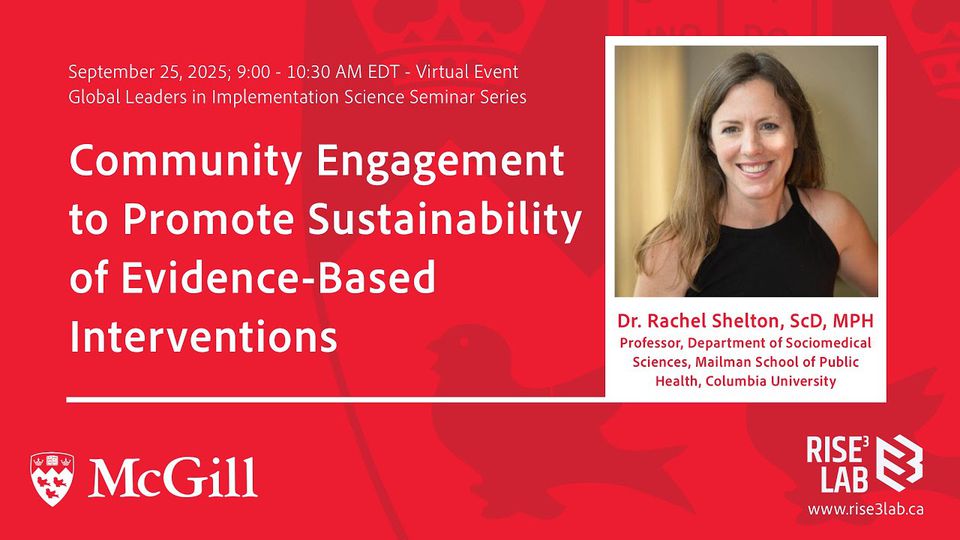
Only about half of evidence-based interventions are sustained beyond their first year. Drawing on a 16-year community-engaged research partnership, Dr. Shelton shows how authentic community engagement informs sustainment, highlights key predictors from longitudinal data, and advocates for implementation frameworks that build community partnership and capacity from the outset.
A persistent gap separates theoretical frameworks from the intuitive knowledge of healthcare professionals. Drawing on a 15-year program of research and a pragmatic clinical trial in Australia, Dr. Taylor compares the strengths and weaknesses of each approach and proposes an integrated, AI-assisted learning system to bridge clinical intuition with theoretical rigor.
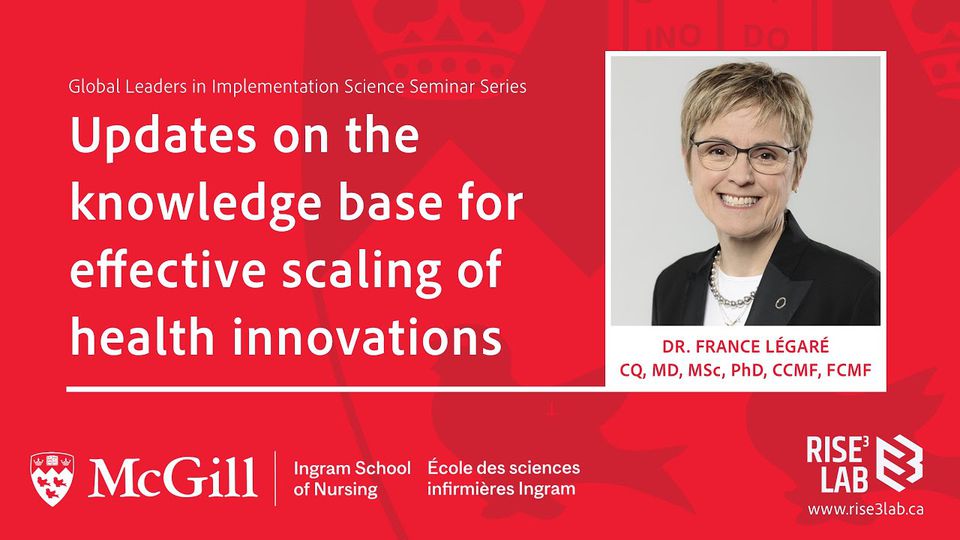
Scaling evidence-based innovations is central to value-based healthcare, yet scaling efforts often fail. Drawing on eight systematic reviews and two stepped-wedge cluster randomized trials, Dr. Légaré proposes updated concepts and definitions for scaling, synthesizes evidence on effective strategies, and highlights critical gaps and ongoing initiatives.
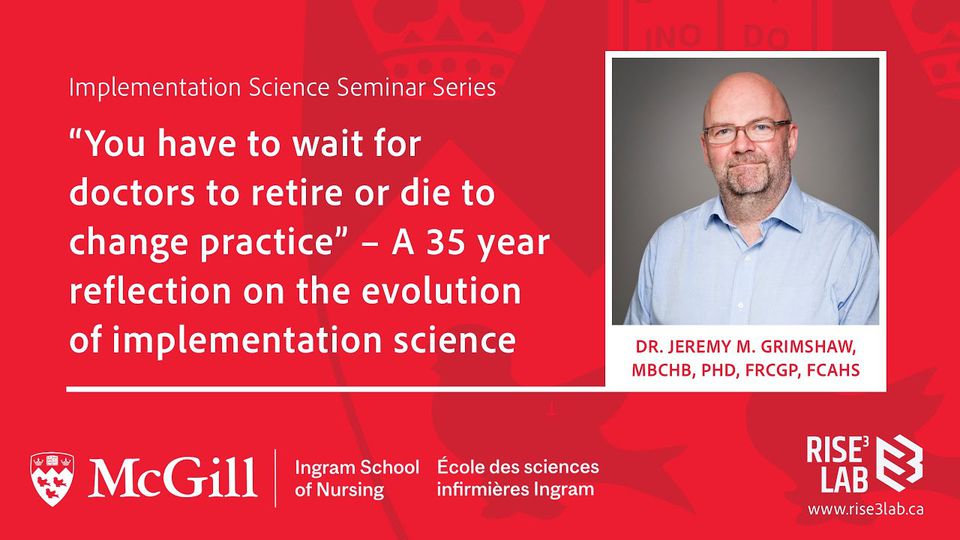
Reflecting on 35 years in the field, including 21 years as Tier 1 Canada Research Chair in Health Knowledge Transfer and Uptake, Dr. Grimshaw shared ten key areas of progress, from growing awareness of evidence-to-practice gaps to a deeper understanding of implementation strategies, and the persistent challenge of implementing implementation science itself.